
4 Signs You Have a Stubborn Dog
Most owners mistake stubbornness for low intelligence. In reality, many “stubborn” dogs are actually quite sharp — they just haven’t bought into your rules yet.
True stubbornness shows up as deliberate testing, selective listening, and repeated boundary-pushing. These dogs understand what you want… they’re just deciding whether it’s worth doing.
Here’s how to spot it:
1. They Ignore Known Commands Around Distractions
This is one of the biggest signs.
For example — You ask your dog to:
• Sit
• Heel
• Come
• Focus
But another dog walks by… And your dog completely ignores you.
Instead, they:
• Pull toward the other dog.
• Continue staring.
• Keep trying to get closer.
• Act like you never said anything.
Even after the other dog disappears… They’re still pulling toward where it went.
This tells you the distraction is more valuable than listening to you.

2. They Check Your Hand Before Deciding Whether to Listen
This happens more than people realize.
You ask for a command.
Instead of responding, your dog immediately sniffs your hand to see if you have food.
If there’s a treat…
• They obey.
If there isn’t a treat…
• They ignore you.
Your dog isn’t responding to the command.
They’re just responding to the possibility of getting paid.
A reliable dog performs the command because they understand it’s expected — not because they saw a treat first.
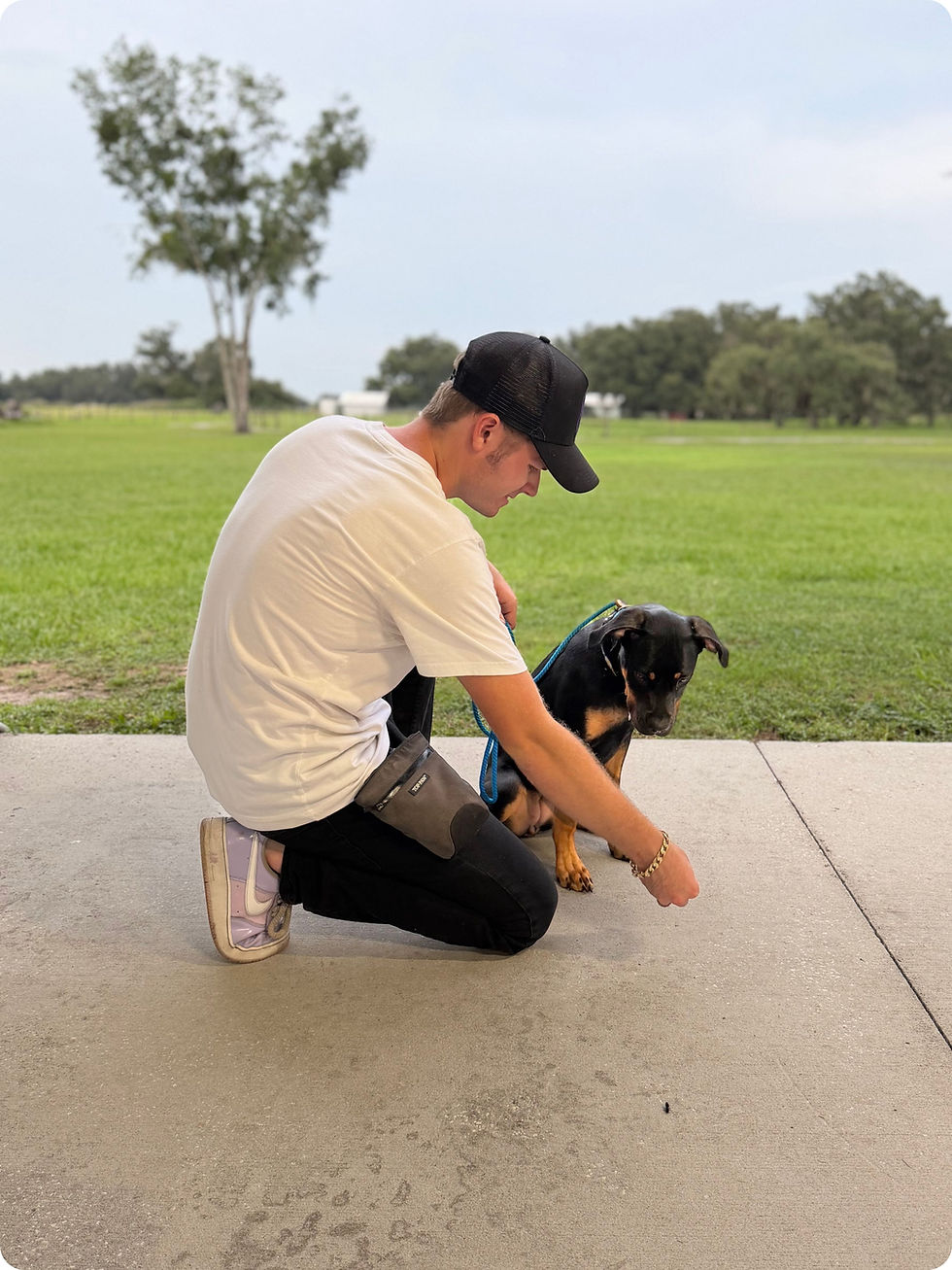
3. They Keep Trying the Same Thing After You’ve Said “No”
A stubborn dog often asks the same question repeatedly.
For example: You say “No.”
Your dog:
• Pulls again.
• Tries to jump again.
• Goes back to barking.
• Heads back toward the trash can.
• Walks back toward another dog.
They’re testing whether the rule is still there.
This is why consistency is so important.
If “No” means “No” every single time…
Your dog quickly learns that making the wrong decision never pays off.

4. They Break Commands the Moment Your Attention Shifts
They hold a Sit, Stay, or Place… until you turn your back, look away, or take a step.
The second your focus breaks, they break too — standing up, wandering off, or going back to what they wanted to do.
This shows they understand the command but only respect it while being actively monitored.

Pro Tip:
Keeping a leash on your dog in situations where they tend to be more stubborn is one of the most powerful training tools you have. If your dog breaks a command they already know, immediately give a firm "No" followed by an abrupt leash pop. The correction should be quick, well-timed, and just strong enough to interrupt the unwanted decision. It allows you to immediately reinforce known commands, prevent your dog from rehearsing unwanted behaviors, and consistently hold them accountable.


Comments